“Well-fed women circle the roulette wheel like plump hens around a feeding hopper.”

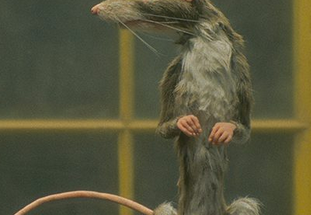
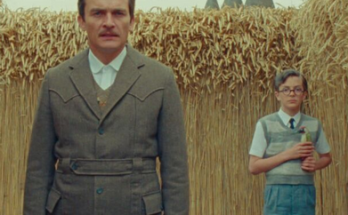
Four of Roald Dahl’s magnificent short stories have been adapted for the small screen by Wes Anderson, to be shown on Netflix as part of a new series of productions of Dahl’s work. I watched all four over the space of two unseasonably warm October days.
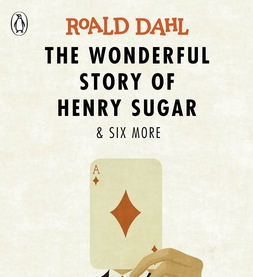
The Wonderful Story of Henry Sugar was written in 1976 at Gipsy House and published along with six other stories in 1977. It follows the attempts of Henry Sugar to master a great and ancient skill which he learns about in typical leftfield fashion by stealing a small notebook from the great mansion of a friend; a notebook that describes the incredible abilities of a man called Imdad Khan (Imhrat Khan in Dahl’s writing). Khan can see without using his eyes.
Benedict Cumberbatch, Ralph Fiennes, Dev Patel, Richard Ayoade and Ben Kingsley all star in Wes Anderson’s version of events. All play multiple characters. Fiennes begins as an introducer or narrator or perhaps chorus-analogue, setting expectations. The opening scene nearly does not feel like watching a film; it feels as though I am watching and listening to someone’s father patiently explaining something he is very interested in. He includes specific details which are important to him that are perhaps not strictly relevant but without which extra colour to the story would be lost.
The theatre-like backgrounds and staging are akin to Anna Karenina (Joe Wright, 2012) and provide the small cast with the opportunity to flex their muscles in various roles. It also allows for the narrator-style exposition to carry a thread through all scenes, which is excellent, and the switch between Fiennes as future narrator to Cumberbatch as past experiencer is very smooth. Ayoade and Patel are amusing and somewhat sweet in their roles as flabbergasted doctors attempting to understand Kingsley’s incredible trick of seeing whilst his eyes are covered in clay, cotton pads, and metres of bandages.
Each scene feels like a dramatic reenactment or perhaps court record being read out, every character giving their side of the story to the camera in asides. Split screens are used several times for dramatic effect; one side is black, the other holds the action in place, making the viewer concentrate on a narrow area of screen, focussing on one specific moment. There is wonderful use of lighting to highlight the eyes of key characters.
Anderson is one of my favourite directors and he has a knack for paying attention to the random accoutrements needed in a room to make it look real, but arranged in such a way that everything looks set-up, purposeful, and unreal. Although Anderson and Dahl are different types of weird, the stories seem to suit having one eclectic man adapt another.
At only 40 minutes long there really is no reason not to watch this film. ‘Wonderful’ is a truly fitting word for this joyful adaptation. The three other short films all clock in at around 15 minutes and I will be discussing those soon.
My final point: Fiennes is brilliant as a policeman.