Poison

“Frivolous thoughts in exciting moments.”

Benedict Cumberbatch, Dev Patel, Ben Kingsley, and Ralph Fiennes appear in this retelling of Roald Dahl’s Poison, directed by Wes Anderson.

Cumberbatch is trapped. He cannot move, cannot leave his bed, or something horrific will happen to him. Nobody can see what the ‘something’ is. Which begs the question: Is it real?

Patel desperately attempts to help his friend, calling on a local Doctor. What follows is a mad and intense attempt to save him. Perhaps not intense; the atmosphere is more neurotic, reflecting Cumberbatch’s mental state as he sweats and panics, frozen in place. Utterly incapable of helping himself or properly explaining his true situation to others, he digs himself deeper into a pit of fear before working himself up into a frenzy after the source (or not) of his alarm is revealed. He thanks his friends by openly insulting and attacking them. Of course, it does not take an English Literature graduate to understand that perhaps what he is really working through is his own internal battles, which he physically shows by tearing into anyone who stays by his side.

Camera angles play a major part in setting the scene. Sideways, forwards, from above, from the ceiling, split screens; all are used to ping-pong between scenes and the man’s mental anguish. This is yet another excellent adaptation, with Dahl’s obsessive and unhinged characters careering into Anderson’s strict and purposeful scene-setting. Loss and loathing scar the small rooms in which the action takes place. Kingsley is wounded in the fray and exits the stage, leaving Patel to clean up the pieces and reassess his friendship with the awful, cornered, scared man in the bed.

The Rat Catcher

“Something sinister and cruel but I had to see it.”

Ralph Fiennes, Richard Ayoade, and Rupert Friend star in a third Roald Dahl Adaptation by director Wes Anderson: The Rat Catcher. Perhaps my favourite of the four, this disquieting story introduces us to Fiennes’ furtive Rat Catcher.

The Rat Catcher himself combines serious skill with suspect delivery to produce a man who keeps you on edge; a man with an appetite for murder and an uncanny resemblance to the animals he is hunting. Fiennes is entirely believable as a man who kills vermin for a living. Ayoade and Friend are increasingly nervous in his presence, moving from indifference to respect to fear over the course of a few minutes. Neither can stop watching with increased fascination and disgust as the little rat man stalks his prey, until the final uncompromising moment when they realise the lengths he is willing to go to reach his goal.

This story reveals Dahl’s penchant for dark undertones that lead you to question who is right and who is the one in the wrong. ‘This is a horrible, deadly, disgusting thing, awful. . . do you want to see?’ is still a universally asked question.

Continuing to use the theatre as a jumping-off point for the stories, Anderson produces depth through layering multiple flat painted boards interspersed with 3D models or sets. Stagehands provide the actors with everything they need. A few actors rotate through multiple roles, disappearing into each one and reappearing again later with an entirely different mindset. Much like in his retelling of Fantastic Mr. Fox, Anderson uses animation for the hapless rats, perfectly employed for maximum reaction.

The Rat Catcher is unrelenting in its build up to Fiennes’ final trick. The atmosphere is that which permeates maybe an ancient rural village undergoing great change. It gets a bit Wicker Man in parts. We also learn about the uses of rat’s blood. None of which are true, I hope. . .

The Swan

“It came to him suddenly that he was going to win.”

The Swan is the second of four of Roald Dahl’s splendid short stories to be adapted by director Wes Anderson. Bringing together Anderson’s eclectic spirit with Dahl’s imagination and undertones creates a rich adaptation of the story of a young boy just trying to survive his day.

Rupert Friend is the main narrator here, with Ralph Fiennes accompanying to give extra context. Friend describes a day in the life of young Peter, a bird-watcher, whose hobby is not appreciated by the local older boys. They torment Peter mercilessly in a series of scenes set up much like a theatre stage. Brightly coloured crops in the fields juxtapose the dark clothes and melancholic subject matter.

Friend reels off every detail in an extremely childlike manner, directly describing everything being re-enacted around him. Is he embodying the child, or is the description straightforward as though someone were listing off points in a memory for an official record? The answer is soon revealed, adding heightened emotion, and making it clear that this is all spoken from the heart. Much like The Wonderful World of Henry Sugar, this speech pattern sounds more like a recollection in a courtroom than a friendly reminiscence.

The theatre setup is used repeatedly throughout these adaptations. Stage-hands discreetly move scenery, hand over props, or move characters into position. A stripe of light focussed only on the eyes draws you into the memories. Cut out circles in cardboard are used to replicate views through binoculars. My favourite detail are the puppets; the birds and children are recreated in perfect stop motion detail, including a handheld woodpecker which young Peter holds that actually moves.

The Swan sat in Dahl’s Ideas Book for thirty years before finally being written out properly in October 1976. This new version is a perfect reimaging of the tale of loss and growth.

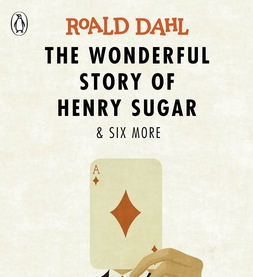
The Wonderful Story of Henry Sugar

“Well-fed women circle the roulette wheel like plump hens around a feeding hopper.”

Four of Roald Dahl’s magnificent short stories have been adapted for the small screen by Wes Anderson, to be shown on Netflix as part of a new series of productions of Dahl’s work. I watched all four over the space of two unseasonably warm October days.

The Wonderful Story of Henry Sugar was written in 1976 at Gipsy House and published along with six other stories in 1977. It follows the attempts of Henry Sugar to master a great and ancient skill which he learns about in typical leftfield fashion by stealing a small notebook from the great mansion of a friend; a notebook that describes the incredible abilities of a man called Imdad Khan (Imhrat Khan in Dahl’s writing). Khan can see without using his eyes.

Benedict Cumberbatch, Ralph Fiennes, Dev Patel, Richard Ayoade and Ben Kingsley all star in Wes Anderson’s version of events. All play multiple characters. Fiennes begins as an introducer or narrator or perhaps chorus-analogue, setting expectations. The opening scene nearly does not feel like watching a film; it feels as though I am watching and listening to someone’s father patiently explaining something he is very interested in. He includes specific details which are important to him that are perhaps not strictly relevant but without which extra colour to the story would be lost.

The theatre-like backgrounds and staging are akin to Anna Karenina (Joe Wright, 2012) and provide the small cast with the opportunity to flex their muscles in various roles. It also allows for the narrator-style exposition to carry a thread through all scenes, which is excellent, and the switch between Fiennes as future narrator to Cumberbatch as past experiencer is very smooth. Ayoade and Patel are amusing and somewhat sweet in their roles as flabbergasted doctors attempting to understand Kingsley’s incredible trick of seeing whilst his eyes are covered in clay, cotton pads, and metres of bandages.

Each scene feels like a dramatic reenactment or perhaps court record being read out, every character giving their side of the story to the camera in asides. Split screens are used several times for dramatic effect; one side is black, the other holds the action in place, making the viewer concentrate on a narrow area of screen, focussing on one specific moment. There is wonderful use of lighting to highlight the eyes of key characters.

Anderson is one of my favourite directors and he has a knack for paying attention to the random accoutrements needed in a room to make it look real, but arranged in such a way that everything looks set-up, purposeful, and unreal. Although Anderson and Dahl are different types of weird, the stories seem to suit having one eclectic man adapt another.

At only 40 minutes long there really is no reason not to watch this film. ‘Wonderful’ is a truly fitting word for this joyful adaptation. The three other short films all clock in at around 15 minutes and I will be discussing those soon.

My final point: Fiennes is brilliant as a policeman.